Wednesday, January 23, 2013

Choosing a new radar system

Radar and Chartplotter
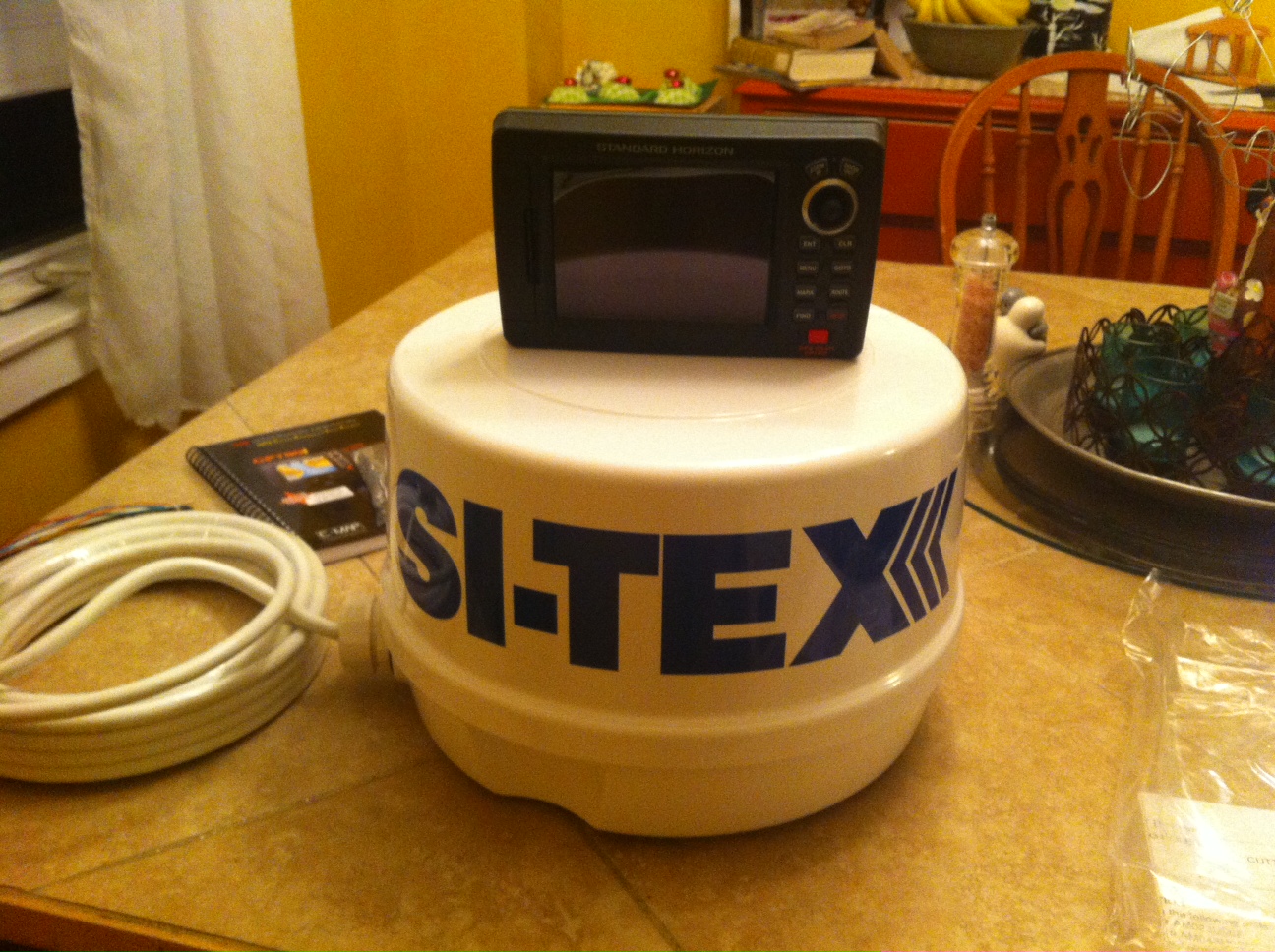
SI-TEX Radar with Standard Horizon CP190i Chartplotter
Living and boating on/near the Bay of Fundy means that fog is a regular problem. With this in mind, I have been looking to purchase a radar system for the last couple of years.

Neither Kijiji nor eBay offered me any real bargains in my hunt so this winter I got serious about the search and looking for new units.

Current Setup
My current electronics are very simple, yet effective. I have an old Magellan 315 handheld GPS, supplemented by an iPhone 4 with charting apps (Navionics). My depth finder is a vintage SeaFarer 3 that looks like something from an old James Bond movie.

This setup isn't fancy but has proven very effective.

Criteria for Radar 
Given the success of my current setup my only real criteria for a new radar system was...well...that it does radar! A few other criteria that factored in:

  • Inexpensive - The new system should be worth less than the boat floating it
  • Relatively small dome
  • Relatively small display that will fit in my available bulkhead space
  • Options for charting  (Not mandatory)
  • Options for adding depth sounder (Not mandatory)
The options
I soon realized that a single purpose radar screen, while available, isn't very cost effective. For a small amount more a chartplotter can be included and offers many more features. I quickly changed tack to focus on chartplotter integrated options only. 


Each of the main manufacturers have similar offerings for chartplotters. They range from simple units to high-end large display units with tight integration with...everything. Of course each does there thing in their own proprietary method (I'll save that rant for another day).

For radar domes there are a few options but basically it comes down to the High Definition/Broadband options or standard models. Within each category you can choose between low-end systems with limited range or higher-end devices with longer range and better overall performance.

The Decision
I was VERY tempted to buy some of the higher end units. There are all kinds of features that are available for "just a couple hundred more". Looking at each unit and the next one up ...and the next one up, it is easy to get pulled into the cool features of the more expensive units.

In the end I dug deep and really analyzed my requirements. When it comes down to it, I expect to be out on the Bay [perhaps] 2 weeks a year. The rest is on the protected Saint John River system. Of those days on the Bay, only a few will be foggy and usually I would just wait out the fog at anchor.

Do I really need all of the extra features for that minimal amount of usage?

Also, I really don't have a great desire to install windmeters, fuel indicators, water level gauges or other electronics that would tie into a chartplotter. So the integration piece isn't important to me.

My final choice was to keep it simple, keep it cheap and go with a SI-TEX MDS-1 dome with a Standard Horizon CP190i chartplotter. This is about as basic as it gets for a chartplotter/radar combo.

I did a LOT of price comparison. I shopped around and compared prices at practically every online vendor in North America. I really expected that Amazon, Overtons or another large US retailer would be cheapest.  In the end I purchased the unit from the local Halifax merchant The Binnacle. Their prices were second to none since the unit was on sale and since they offer free shipping. They have also consistently given me stellar service. In the end $1807 (including tax) got me my new toy.

The success of my plotter choice should clarify over the coming year. I will include details of my installation as well as my review of the product choices as I use them.

If you have opinions about these units, boat electronics...or anything else, please leave a comment.

Wednesday, October 3, 2012

Airhead Composting Toilet - Year 1 review

The boat is out of the water, we've started to do our winterizing and it's time to sit back and reflect on our new place for sitting back and reflecting. Our composting toilet. As you may recall from previous posts, I installed an Airhead composting toilet this spring.

Overall our experience with the Airhead has been very good. We used the boat 1-3 days per week throughout the summer, averaging four people onboard. We also had a full 6 day cruise with the family, in the middle of the summer, that was a true test of the system.

Using the Airhead

We have had almost no issues with using the Airhead. We do make sure to take a couple of minutes to orient guests on how to properly use the system but, really, it is dumb simple. 

The only use problem that we did have was with a younger child who insisted on opening the solid flap when it was a liquid job, if you know what I mean. That resulted in a smelly slurry being formed in the solid bin after a weekend of misuse. Adding extra peat moss solved the issue fairly quickly (a couple of days). 


Cleanliness 

We had no cleanliness issues. A quick wipe down on occasion and a spray bottle of water for occasional use kept the unit very clean. 


Emptying the unit

I found that we had to empty the liquid tank approximately every 1 1/2 days with 4 people on the boat. This varied a bit depending on the amount of beer being consumed! Emptying the liquid tank is quick and easy. Don't wait for it to get full in the middle of the night though! 

We did have to empty the unit near the end of August. I'm guessing that we could have gotten through the rest of the summer had we not had the above-mentioned 'slurry episode'. The extra peat moss added a lot of volume. Regardless, emptying the unit, was straight forward and no more difficult or unpleasant than a single pump-out would be in a standard holding tank setup. We emptied the contents into a doubled compostable garbage bag. We've set the bag behind our garden to give it some time over winter to fully compost.  


Issues

There weren't many issues but there were a few:

  1. Exhaust fan - The exhaust has stopped working 3 times throughout the summer. I simply had to take the vent housing apart and give the fan a little turn manually and it would start spinning again. I presume that there was little bits of dust that were clogging the fan. Perhaps a stronger fan motor would be in order. (Update [10/8/2012]: This part is under warranty and will be replaced by Airhead) 
  2.  Liquid level indicator - There is a little clear tube that shows the level of liquid in the tank. It regularly gets clogged by small bits of crud that end up in that tank through normal use. Don't rely on the little tube to tell you the bottle is full! 
  3. Agitator - The agitator inside the solid tank doesn't always stir the full contents of the unit. This only became apparent as I tried to add peat moss to fix my slurry issue. Not usually an issue.

Conclusion
I would recommend an Airhead to other boats (I regularly do!). It certainly beats our old holding tank system. It is easy to maintain and use. It is also a good conversation piece!

If you have any specific questions or comments about our experience with the unit (or anything else), please comment below. 

Friday, May 11, 2012

Composting Toilet Installation

Installation of the composting toilet itself is pretty straight forward. Much more effort was required removing the old toilet and adjusting the floor than was required for the actual installation of the toilet.

    Remove the existing toilet system parts, including:

    • Holding tank
    • Holding tank pump piping
    • Y-valve
    • Toilet and piping. Removing the toilet itself proved most difficult since the bolts holding it in place were stripped. A hacksaw was the final solution.

    Test fit
    Test fit the Airhead toilet. The back few inches of my head has a significant sloped area. This greatly reduces the working area of the toilet. After test fitting I decided to add a raised floor so that I could get the maximum front-to-back clearance.


     Make raised floor.
    I made the raised floor out of 1/2" plywood, cut to shape using a cardboard template and supported by 1x3 spruce boards. I stained and varnished the floor to match the rest of my bright-work. I used brass L-brackets to hold the raised floor in place. This will allow for easy removal if I need to get access below.

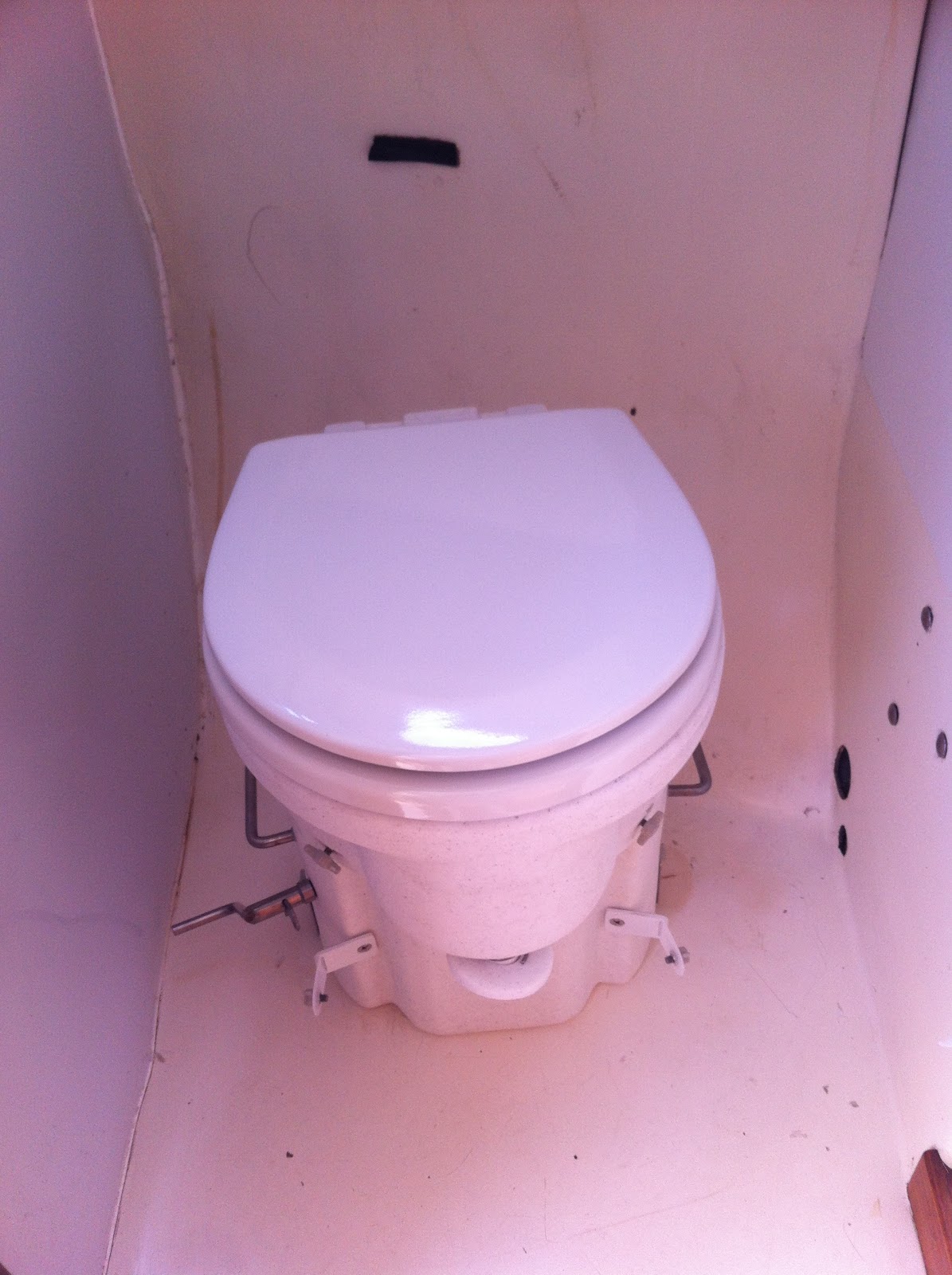
    Install Airhead unit. The toilet unit itself is literally as easy as screwing in 4 screws into the two brackets.
    Installed with raised floor

    Install air fan. I have an existing cowl vent into the bathroom. I simply screwed the fan assembly on top of the existing vent whole.
    Fan assembly attached to cowl vent

    Run vent hose. I used 6 feet of vent hose and simply attached it to the wall with 1 1/2" plastic pipe brackets. Once the pipe is tucked in properly it isn't as ugly as I expected.

    Run wiring.  I used standard 14 gauge wire (overkill I think) to wire directly from the fan to my auxiliary battery. I have two medium sized solar panels that keep up the charge on the battery. I don't even notice the load of the vent fan on my electrical. 

    Test run! I will update later with my production review of the toilet.